

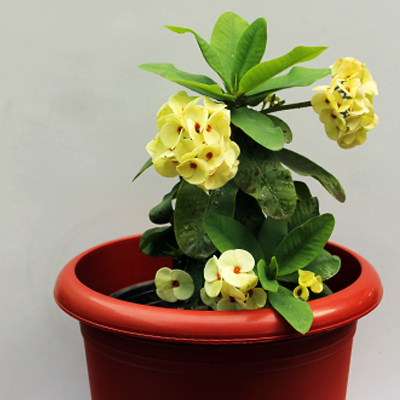
Euphorbia ( Yellow
Description for Euphorbia ( Yellow - Red ) Plant height: 7 - 11 inches Plant spread: 4 - 8 inches Bright-green leaves grow along its thick, thorny stems. Lower leaves naturally fall off as the plant ages. If your plant gets too tall and leggy, you can prune it back by half its size in spring. This will cause it to branch out. New stems will grow from below where the pruning cuts were made, making this succulent bushy and full. Euphorbia includes annuals, perennial herbs, shrubs and trees that have a corrosive and poisonous milky sap. Many are succulent and can either be thorny or unarmed. The deciduous leaves can either be alternate, opposite or in whorls. All spurges produce unisexual flowers. Its flowers are actually bracts that last for several weeks and are available in bright pink, red, white or yellow. Today's hybrids produce more -- even bigger

Eucalyptus, Nilgiri
Description for Eucalyptus, Nilgiri Plant height: 19 - 29 inches Plant spread: 4 - 8 inches Some types of Eucalyptus can be grown as houseplants and others do well only in warm climates growing outside. Most eucalyptus must be grown outside in areas where freezing does not occur. Eucalypti are attractive plants with aromatic leaves often used in herbal preparations and for potpourri and scented wreaths. The trick to growing eucalyptus is to know they prefer cool but above freezing winter periods and moderate warmth in the summer. Common name(s): Rainbow Eucalyptus, Flower colours: white to pale yellow Bloom time: Early summer Max reachable height: 1.5 to 2 feet Difficulty to grow: Easy to grow Planting and care Several eucalypt species are among the tallest trees in the world. Eucalyptus regnans, the Australian mountain ash , is the tallest of all flowering plants (angiosperms); today, the tallest measured specimen named