

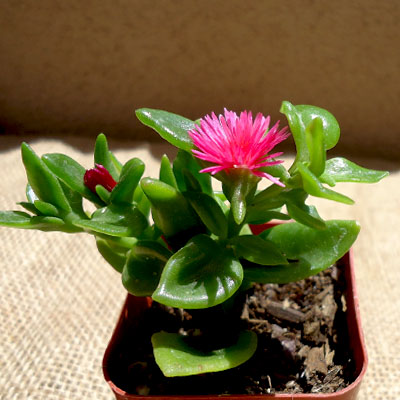
Aptenia, Heartleaf Ice
Description for Aptenia, Heartleaf Ice Plant Plant height: 2 - 4 inches Plant spread: 4 - 8 inches Aptenia cordifolia is a sun-loving perennial that produces small, bright reddish-purple, daisy-like blooms atop thick, succulent stems. In cooler climates, Aptenia cordifolia is grown as an annual. Common name(s): Ice plant. Flower colours: Reddish-purple. Bloom time: Spring and summer. Max reachable height: Up to 60 cm Difficulty to grow: Easy. Planting and care Re-pot when the plant performs clump and goes beyond the pot size. It should be done before or after the rainy season and in the spring season. Re-pot with the following proportions: 3 parts of potting soil, 1 part of grit (pumice), 1 part of the horticultural-grade sand, 1/2 part of the compost etc. Sunlight: Full sun, partial sun, at least 4 to 6 hours of sunlight per day. Soil: Avoid excess organic contents in the soil. Water: No
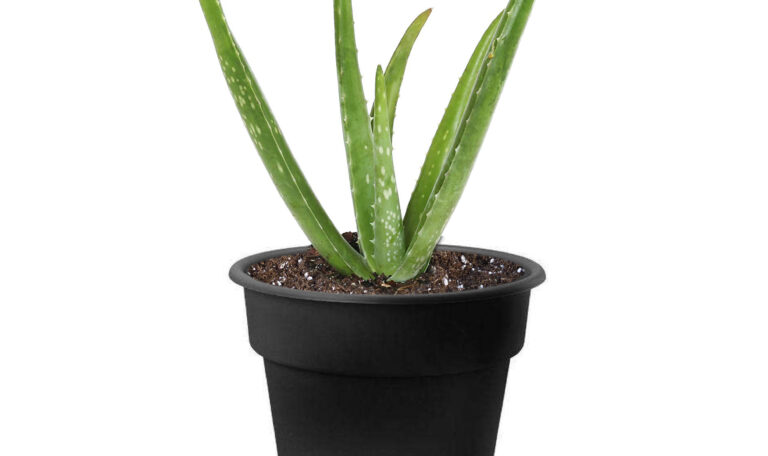
Aloe vera (Small)
Description for Aloe vera (Small) Plant height: 5 - 8 inches Plant spread: 2 - 4 inches Aloe vera, commonly known as Medicinal Aloe, is native to the arid regions of north-eastern and southern parts of Africa and Madagascar. It has been widely grown as an ornamental plant. Aloe vera is popular with modern gardeners as a putatively medicinal plant and for its interesting flowers, form, and succulence. It is a very easy plant to care for, making it a staple in many homes. These succulent plants are known for their ability to thrive under virtually any conditions, as they grow equally well indoors and outdoors with minimal care. Common name(s): Aloe, Ghrita-kumari, and Korphad Flower colours: Yellow Bloom time: Summer Max reachable height: Up to 3 feet Difficulty to grow: Easy to grow Planting and care It can be planted outdoor as well as indoor. Plant in a bright,

Aloe vera
Description for Aloe vera Plant height: 0.7 - 1.2 inches Plant spread: 4 - 8 inches Note: Any variety of these plants will be delivered, few shown in the photos. Aloe vera is the scientific name of a plant which lives more than 3 years. It is a succulent and stores water and food in the modified stem. The leaves are thick and fleshy, green to grey-green, with some varieties showing white spots on stem surfaces. Common name(s): Aloe, Ghrita-kumari, Korphad Flower colours: Yellow Bloom time: Summer Max reachable height: Up to 3 feet Difficulty to grow: Easy to grow Planting and care It can be planted outdoor as well as indoor. Plant in bright, sunny location in a well-drainage pot. Do not plough so much deep as the leaves may get infection from the soil. Cover the root ball when planting but do not let the leaves touch the
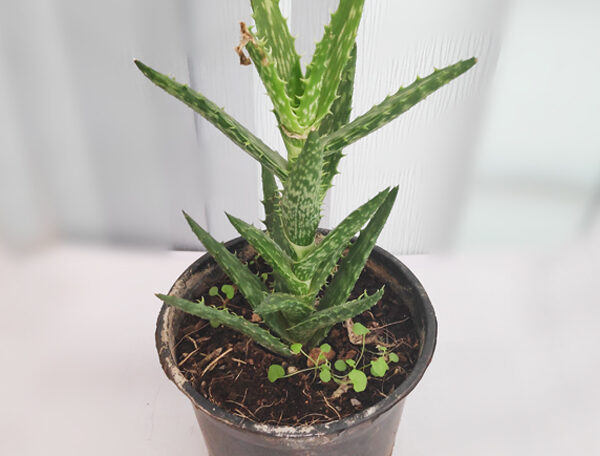
Aloe juvenna
Description for Aloe juvenna Plant height: 2 - 4 inches Plant spread: 2 - 4 inches The Aloe Juvenna leaves have bright green (reddish to brown in full sun), toothy-margined and flecked with cream-white prominent spots. The inflorescence is the unbranched spike, up to 10 inches (25 cm) tall with bright coral-pink to orange-red flowers with a yellow-green mouth. Common name(s): Tiger Tooth Aloe Flower colours: Produces orange-red flower spikes in the springtime Bloom time: Spring Max reachable height: Up to 30 cm Difficulty to grow: Easy to grow Planting and care Re-pot when the plant performs clump and goes beyond the pot size. It should be done before or after the rainy season and in the spring season. Re-pot with the following proportions: 3 parts of potting soil, 1 part of grit (pumice), 1 part of the horticultural-grade sand, 1/2 part of the compost etc. Sunlight: Full sun, partial
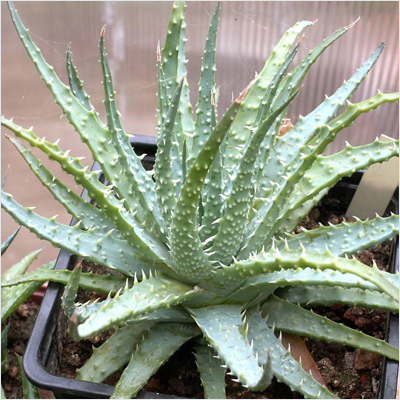
Aloe humilis
Description for Aloe humilis Plant height: 2 - 4 inches Plant spread: 1 - 3 inches The species is frequently cited as being used in herbal medicine since the beginning of the first century AD. Extracts from Aloe vera are widely used in the cosmetics and alternative medicine industries, being marketed as variously having rejuvenating, healing, or soothing properties. There is, however, little scientific evidence of the effectiveness or safety of Aloe vera extracts for either cosmetic or medicinal purpose. Aloe vera is used in traditional medicine as a skin treatment. In Ayurvedic medicine, it is called kathalai. Common name(s): Kathalai, Spider Aloe Flower colours: orange or yellow Bloom time: Late winter to spring Max reachable height: 1-3 feet Difficulty to grow: Easy to grow Planting and care The first step in aloe plant care is to realize that this plant is a succulent. Like cacti, succulents do best in
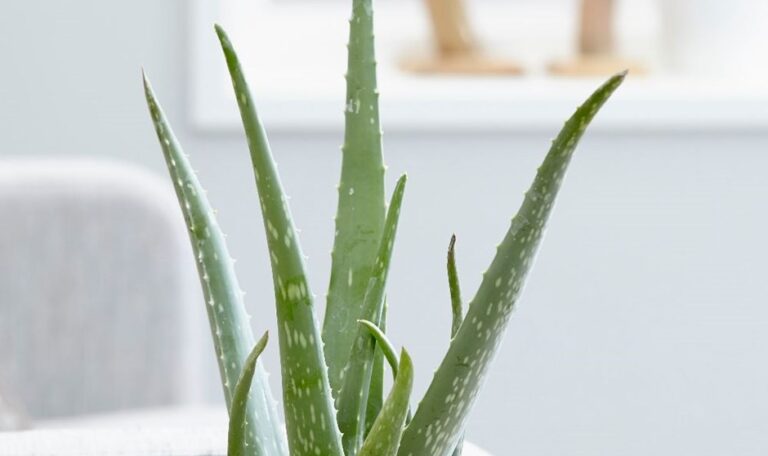
Aloe barbadensis vera
Description for Aloe Barbadensis Vera Plant height: 3 - 6 inches Plant spread: The species is frequently cited as being used in herbal medicine since the beginning of the first century AD. Extracts from Aloe vera are widely used in the cosmetics and alternative medicine industries, being marketed as variously having rejuvenating, healing, or soothing properties. There is, however, little scientific evidence of the effectiveness or safety of Aloe vera extracts for either cosmetic or medicinal purposes. Aloe vera is used in traditional medicine as a skin treatment. In Ayurvedic medicine it is called kathalai. Common name(s): In Ayurvedic medicine it is called kathalai. Flower colours: - Bloom time: - Max reachable height: 1-3 feet. Difficulty to grow: Easy to grow houseplant. Planting and care The first step in aloe vera plant care is to realize that this plant is a succulent. Like cacti, succulents do best in dry conditions.
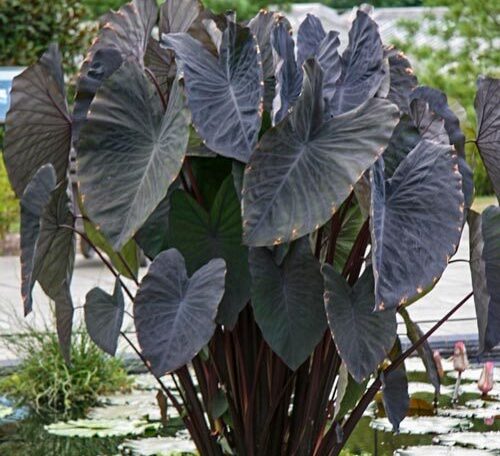
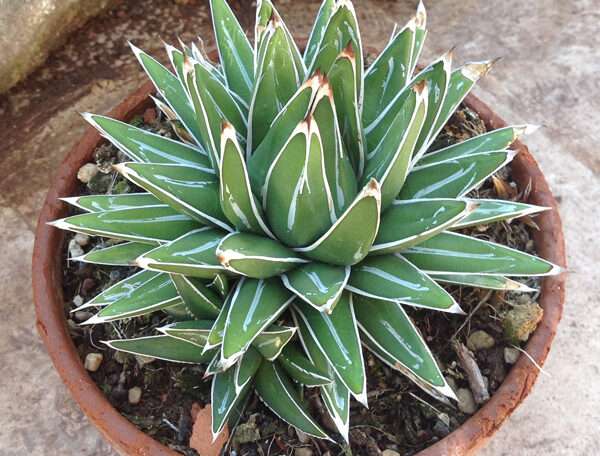
Agave Victoriae
Description for Agave Victoriae Plant height: 2 - 4 inches Plant spread: 2 - 4 inches This agave is highly variable in form, but in general, the rosettes are small and compact, composed of short, rigid, thick leaves that are green with a pattern of distinctive white markings. The markings are generally along leaf keels or margins, giving a sort of polyhedral appearance. It is very impressive when big, with its bold structure, and beautiful form. On the rare occasion when it finally blooms, it is a complete show-stopper; The stalk bolts to the sky and the showy flowers grace the neighborhood. It works beautifully as a single large specimen and also when planted amass with other agaves. Tough and particularity indestructible this Native beauty should be in anyone drought-tolerant landscape. Works particularly well when planted with ornamental grasses nearby. Common name(s): Victoria, Blue Agave, American Aloe, Maguey Flower colours:
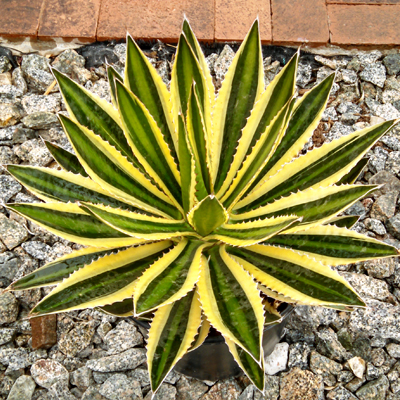
Agave lophantha, Ghaypat
Description for Agave Lophantha, Ghaypat Plant height: 5 - 8 inches Plant spread: 3 - 5 inches Commonly mistaken for cacti or aloe plants, Agave is a separate genus with very distinct features. Native to the southwestern United States and Mexico, there are over 200 species of Agave plants. Common name(s): Agave species Flower colours: Light grayish green to yellow. Bloom time: Not defined Max reachable height: Up to 2 feet. Difficulty to grow: Easy to grow Planting and care In partially shaded areas, this plant can be used as a focal point in a desert garden, or in groups as a barrier. The saw-like flat leaves grow from a dense rosette base and spiral outwards. Sunlight: Full Sun Soil: Well-drained soil Water: Medium Temperature: 20 to 35 degree C Fertilizer: Apply any organic fertilizer Caring for Agave Lophantha These plants are susceptible to root rot due to overwatering, so
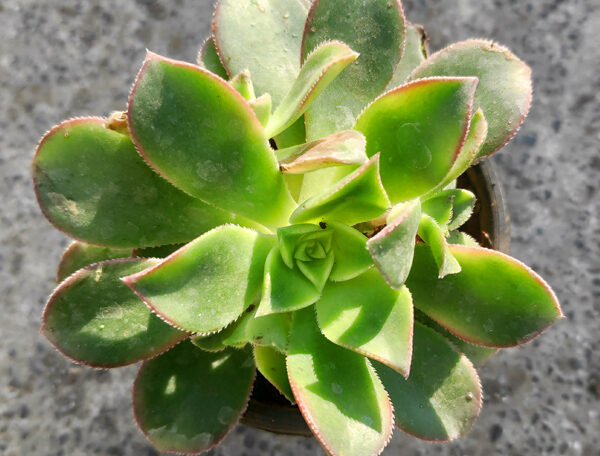
Aeonium decorum Tricolor
Description for Aeonium decorum Tricolor Plant height: 2 - 4 inches Plant spread: 2 - 4 inches Aeonium decorum Tricolor is also known as Aeonium Kiwi, is a very attractive and showy plant up to 2 feet in height. This succulent forms rosettes of fleshy, spoon-shaped leaves that are brilliantly colored. The leaves in the center are pale yellow and progressively the leaves get greener to the outside of the rosette. The leaf edges are a red color. Yellow flowers bloom in the summer. Common name(s): Kiwi Aeonium Flower colours: Yellow Bloom time: Summer Max reachable height: Up to 2 feet Difficulty to grow: Easy to grow Planting and care This Aeonium propagates best by vegetative methods, but they will also grow from seed. Stem cutting propagation is the simplest and most effective means of propagating this Aeonium. Re-pot with the following proportions: 3 parts of potting soil, 1 part